
The core issues to be settled -- access to Hormuz, Israel's aggression in Lebanon, the question of Iran's nuclear programme, sanctions relief and compensation -- are thorny enough to require weeks of patient negotiation. The most likely outcome of the opening sessions is that both sides take the measure of each other, establish what is and is not negotiable, and return home without having broken anything. That would count as progress.

Trump may strike. He may announce productive talks and extend again. He may do both at the same time. Iran will not open the Strait on someone else's terms, so no matter what happens, that problem will remain unsolved. And the IRGC will still be collecting its $2 million toll from every ship bold enough to ask permission to pass.

Iran is fighting a different war: Older, slower, and in some ways more dangerous. Iran doesn't need to shoot down an F/A-18. It only needs to make the Strait of Hormuz feel dangerous long enough for insurance markets, shipping companies, and oil futures traders to do the rest. Prem Panicker continues his must-read daily blog on the war in the Middle East.

The ceasefire is still technically holding, to the extent that no overt hostilities have been reported yet, but the rhetoric has hardened dangerously. The week ahead will also clarify whether the Islamabad failure was a negotiating tactic or whether Washington has genuinely locked itself into a position from which the only exits are climb-down, escalation, or the slow bleed of a new status quo that nobody chose and nobody controls. Prem Panicker continues his must read blog on the Iran War.
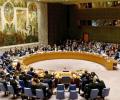
Pakistan and China have submitted a joint bid at the UN Security Council to designate the Balochistan Liberation Army (BLA) and its suicide wing - Majeed Brigade - as a terrorist entity under the Council's 1267 Al Qaeda Sanctions Committee.
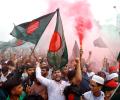
'Pakistan will also try to turn Bangladesh into a base for terrorist attacks on India.'

Trump has made similar claims many times since May 10 last year, stating that it was his pressure that led to peace between the two nuclear-armed neighbours as he makes his pitch for the Nobel Peace Prize.

'The next two to three weeks will not be decided in Washington.' 'They will be decided in Tehran, in whatever calculation Iran makes about the costs of continued resistance against the costs of appearing to have yielded.'

Whether Freedom At Midnight 2 has a political agenda, a bias or two will be read into it, depending on the affiliation of who is watching, notes Deepa Gahlot.

'Pakistan has found itself in a favourable position after Operation Sindoor by appreciating the mediation as claimed by Trump and recommending him for the Nobel Peace Prize.'

The cost of the war is being counted not in the corridors of power in Washington or Tehran, but in Firozabad's darkened furnace rooms, Howrah's idle casting sheds, and a barbershop in Kochi where the wait is suddenly, inexplicably, an hour long, notes Prem Panicker in his must read blog on the Iran War.

'Never before has the Congress been part of a rainbow coalition, and the response from the people has been overwhelming.' 'Assam's diversity cannot be represented by a single voice -- it requires a collective effort, and that is what we are building.'
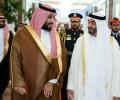
What began as a mentor-protege relationship between UAE President Mohammed bin Zayed and Saudi Crown Prince Mohammed bin Salman has now evolved into a broader contest over influence, strategy, and leadership in the Middle East, points out Asif Ullah Khan.
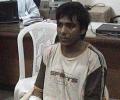
'The jail staff told me Kasab was served only jail food and not biryani.' 'They told me that Kasab was beaten regularly after court proceedings.' 'And they filled Kasab's bottle with urine so that whenever he felt thirsty he used to drink urine.'

India's handling of the Iran crisis reflects a growing strain between strategic autonomy and geopolitical alignment, observes Ambassador M K Bhadrakumar.
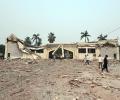
'Operation Sindoor had three objectives.' 'One, destroy the Lashkar-e-Taiba headquarters at Muridke and the Jaish-e-Mohammed headquarters at Bahawalpur.' 'Second, deter and defend any counterstrike by Pakistan.' 'And third, if they persist, demonstrably deliver counterforce punishment.' 'All of the three boxes, the IAF checked,' points out Shekhar Gupta.

'Was the five-day pause ever meant to hold, or was it simply another instrument of signaling, of positioning, of buying time in a war where even the pauses are tactical?' asks Prem Panicker in his must read daily blog on the Gulf War.

Delhi should keep all its options open in what is essentially a transitional period in the geopolitics of energy rather than remain a gatekeeper serving Trump's 'America First', suggests Ambasssador M K Bhadrakumar.

Khaleda Zia, the former Prime Minister of Bangladesh and a dominant figure in the country's politics, has died at the age of 80 after a prolonged illness. Her career spanned decades and included periods of both power and controversy.
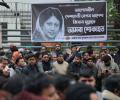
Former Indian envoys reflect on the life and legacy of Bangladesh's former Prime Minister Khaleda Zia, highlighting her role in restoring democracy and the complex relationship between India and Bangladesh during her tenures.
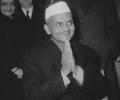
He chose what was best for India, not for himself. Few can deny that when god took Shastri away so soon, they did India an injustice, points out Harishchandra.

'The BNP's election manifesto lists grievances against India, mirroring the attitude of past BNP governments.' 'Political parties have been careful not to say bad things about China.'

German double Olympic biathlon champion Laura Dahlmeier has died after a mountaineering accident in Pakistan, her management and local authorities confirmed on Wednesday.
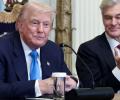
US President Donald Trump announced a deal with Pakistan to develop its oil reserves, suggesting Pakistan might sell oil to India in the future.

While the Prime Minister did not spell out the details of the three instances, his remarks are being widely interpreted as a reference to the 2016 surgical strikes following the Uri terror attack, the 2019 Balakot air strikes after the Pulwama bombing, and the recent cross-border strikes as part of 'Operation Sindoor'.

According to the NIA, Md Kamruj Zaman was found guilty of raising a local module of the banned Hizb-ul-Mujahideen in Assam during 2017-2018.

Today's situation in the Shaksgam Valley is the consequence of what happened in Gilgit in 1947. But is India ready to militarily get back its territories? asks Claude Arpi.

Every UN secretary-general has flagged the financial situation, but Antonio Guterres has issued the direst warning yet, calling it a 'race to bankruptcy and of imminent financial collapse, points out Ambassador T P Sreenivasan.
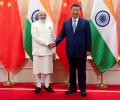
'China's basic purpose of taking the Shaksgam Valley was access to the Indian Ocean.'

India was among the countries not present in Davos when US President Donald Trump unveiled his "Board of Peace" that seeks to work towards bringing lasting peace to Gaza and possibly resolve global conflicts. India is yet to take a call on it, people familiar with the matter said when asked about Trump's invite to PM Modi.

Under the defence partnership, India and the UAE are eyeing defence industrial collaboration and cooperation in advanced technologies, cyberspace training, special operations, interoperability of their militaries and counter terrorism.

Trump's 'Board of Peace' is being projected by Washington, DC as a new international body to usher in peace and stability in Gaza and beyond, triggering speculation that it could throw a challenge to the United Nations.

The United States, which entered this war in expectation of a short, sharp win along the Venezuela model, is now preparing for deeper involvement in a conflict it does not fully control, without the allies it typically relies on, against an adversary that is not behaving as expected, in a global environment that is already absorbing economic shock. Prem Panicker continues his must read daily blog on the Gulf War.

Sensitive issues remain. Water sharing of the Ganga and Teesta rivers. Treatment of minorities, particularly Hindus. Border management. Trade imbalances. Connectivity projects.What happens next will shape not just bilateral ties, but the balance of South Asia itself, points out Ramesh Menon.

Tension grips Malkangiri district in Odisha after a tribal woman was beheaded, leading to clashes and property damage. Internet services are suspended as authorities work to restore peace.
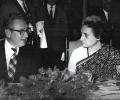
'She was brave. She didn't care a hoot. And India was not the strongest of nations as it is now.'
'She was brave. She didn't care a hoot. And India was not the strongest of nations as it is now.'

India's National Security Advisor Ajit Doval is expected to attend a major security meeting in Moscow next week, organized by Russia's Security Council. Doval is invited for the 13th international meeting of high representatives for security issues, taking place from May 27-29. The meeting, chaired by Sergei Shoigu, Secretary of the Security Council of the Russian Federation, will see participation from over 150 countries and international organizations. Pakistan's NSA, Lt Gen Asim Malik, is also expected to attend the meeting, leading to speculation of a possible face-to-face meeting between the two NSAs amidst heightened tensions between India and Pakistan following the Pahalgam attack and subsequent retaliatory actions.
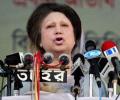
Khaleda Zia, Bangladesh's former first female prime minister and chairperson of the Bangladesh Nationalist Party, has died at the age of 80 after a prolonged illness.

...with a principal reason to stop Pakistan's ISI's support to insurgencies in the North-East of India.
